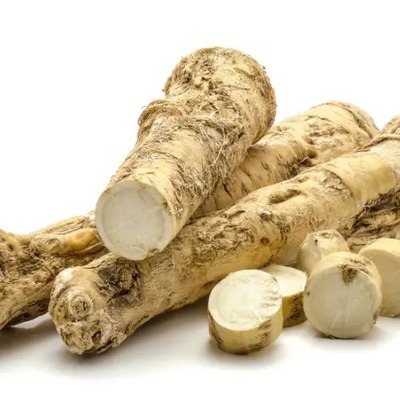
Horseradish (lat. Amoracia rusticana, syn. Cohlearia amoracia) is from the Brassicaceae family. The root of the stem is white and is used as a vegetable or spice. When cut or grated, due to the enzymes it contains, it spreads a strong odor that causes tears. Horseradish is a shrubby plant up to 1.2 m tall. The stem is 30 to 40 cm long and up to 6 cm wide.
Horseradish (the name is of Slavic origin) originates from eastern and southern Europe, where it can now be found in a wild form. From there it spread throughout Europe. Japanese horseradish wasabi is similar in aroma to European horseradish, but differs from it in green color.
Horseradish was originally used as a medicinal plant. In the Middle Ages, it was used against poisoning, earaches, fever, etc. Today, it is used to improve the body’s resistance and protect against colds. It also improves blood circulation, facilitates coughing, and treats flu and urinary tract infections. When used externally, it is used as a compress for rheumatism, joint pain, insect bites, sciatica and nerve pain. For headaches, inhale the scent of grated horseradish. It helps with digestive problems. It contains antibacterial and anticarcinogenic substances, which are also found in garlic (allicin, sinigrin). Horseradish is not suitable for people with kidney, stomach and thyroid problems. As a spice, it is most often used grated, as an addition to cooked meat or as an addition to sauces.
It was known for its medicinal properties in ancient times. It contains vitamins C, B1, B2 and B6, potassium, calcium, magnesium, iron and phosphorus.
According to popular belief, horseradish has always been attributed with healing powers, which is why it was cut into rings and strung on a thread and placed around children’s necks as an amulet.