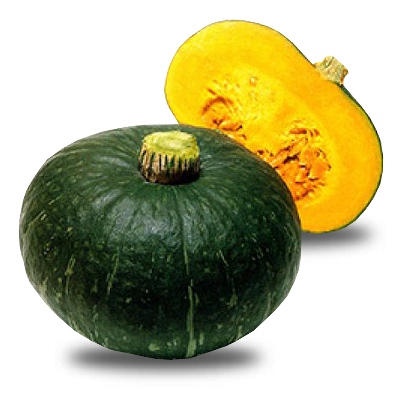
The definitive world standard for pumpkins is the Kabocha pumpkin. An excellent delicacy that comes from Asia. It is believed that Portuguese sailors brought this type of pumpkin from Cambodia in the 16th century to Japan, where the name was shortened to Kabocha. It has a very dry but delicious “meat”. The flesh is 2-3 cm thick, smooth, with a thin rind that is also edible. It is of exceptional quality, taste and specific aroma, which most resembles the smell of watermelon. Most varieties have an oval-flattened fruit. The flesh of the pumpkin is excellent for cooking and baking when the pumpkin is ripe, or for stewing, frying while the fruits are young. The cavity is mostly filled with seeds that are also edible in young fruits. The flesh is thick, juicy, sweet, of a fine consistency and dark orange. It contains 15 mg of b-carotene per 100 g of fruit, which is 24,000 international units of vitamin A (9,000 in carrots), which places this vegetable in a highly positioned place among all plant products. Kabocha squash has proven to be simply the best, because there is simply no place where it could not or should not be applied. The plant is very decorative with a long stem, well covered with leaves on long stalks. The leaves are most often speckled with white spots, and the flowers are medium-sized, with beautiful orange corollas. Squashes are well stored in relatively warm rooms of 16° C. Relative humidity in the air is important for long-term storage of fruits and they are best stored in a room with about 70% humidity in the air. Storage conditions and the size of the warehouse are one of the most important factors for serious pumpkin production. Handicraft and the quality of Croatian soil put Croatian Kabocha in terms of quality, in the leading position on the European market, just as Butternut squash has ensured. Kabocha squash is now present on the Croatian market throughout the year. Kabocha squash, with its exceptional characteristics and quality in EU countries, along with its nutritional value, is trying to find its place in the field of medicinal properties, which is the basic characteristic of squash.
MEDICINAL PROPERTIES
Kabocha contains large amounts of pectin, which binds toxins from the digestive organs and thus cleanses the body and facilitates the excretion of urine, which improves the functioning of the kidneys, heart and blood vessels. It is an excellent food and medicine for patients with kidney and gallstones, chronic hepatitis, cirrhosis of the liver, heart problems, and pancreatic problems.
PREPARATION
Like other squashes, it is usually used to prepare side dishes and soups, but it can be prepared like any other squash or potato. It is good for baking, cooking, on the grill, in the form of puddings, stewed fruit, cakes, pies and a substitute for dessert sweets. It is good for processing into juices, purees, compotes and jams. The texture and flavor can be compared to a combination of pumpkin and sweet potato. The seeds are delicious and very nutritious. The shelled seeds can be used instead of nuts in baking. Kabocha pumpkin seeds are rich in lecithin, a substance containing phosphorus, important for fighting cholesterol.