Physalis
Taste: sweet and sour, aromatic, apricot notes
How to eat: remove the fruit from the outer shell and eat
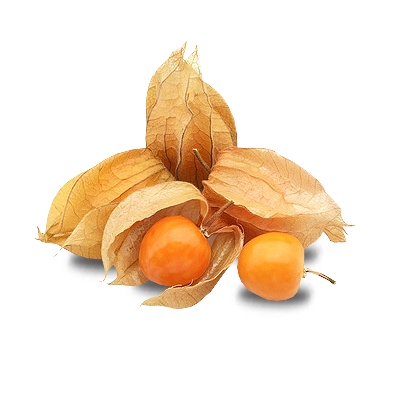
Ripeness: fruits are light orange
Storage: refrigerator 2 weeks
Physalis peruviana – known as “love in a cage”, also known as cape gooseberry or wild cherry. The Peruvian strawberry is an annual plant from the solanaceae family – helpers (tomato, potato, etc.). It is planted early in the spring, so that it starts to bloom as soon as possible and to bear more abundantly, and so that the fruits can ripen before frost. One plant produces as many as 100-150 fruits. It starts to bloom in June/July, and the flowers are yellow-black. After flowering, green lanterns are formed in the place of the flower, inside which the fruit develops. When the lampoin turns yellow, the fruit is ripe and orange in color, and has a phenomenal taste. The fruits are protected by small yellowish lanterns. Inside is a yellowish, firm berry the size of a cherry, slightly sharp, sour, but still very pleasant taste. Physalis is a favorite fruit-vegetable of Latin American cuisine, and is used to prepare salsa that is served with tortillas or green chili peppers fried in batter. The fruit is rich in vitamin C, can be eaten raw or cooked into jams, and it is not recommended to eat more than 6 fresh ones at a time. The sweet berries are eaten fresh and are an integral part of fruit salads in combination with other fruits. Also known as ‘Inca fruit’, it contains vitamins A, C, B1, B2, B6, B12 and contains a lot of phosphorus, and 16% protein, which is a very high percentage for a fruit. Scientific research has shown that the components of the fruit, polyphenols and / or carotenoids, show anti-inflammatory and antioxidant properties.
MEDICINAL PROPERTIES
It is very medicinal and is used to treat abscesses, coughs, fever and pneumonia, and dermatitis.
Physalis angulata – is known as Mullaca. It is very medicinal and seedlings will be available in our country in the spring of 2011. It is native to most continents in the tropics, Africa, Asia and America. It grows up to 1 m tall, has cream-colored flowers, and produces small, bright yellowish-orange edible fruits. Various extracts of Mullaca, extracted from the plant steroid physalins, have shown strong in vitro and in vivo (mice) activity against numerous types of human and animal cancer cells of the lung, colon, nasopharynx, liver, cervix, melanoma and glioma (brain) cells. Traditionally the fruits are used to treat various diseases, including kidney disease, jaundice and fever.
Nutritional value per 100 g of berries:
Calories 76 cal
Fat 1 g
Carbohydrates 5.8 g
Dietary fiber 2 g
Sugar 3 g
Protein 1 g
Vitamin C 12 mg